US4924331A - Method for mapping around defective sectors in a disc drive - Google Patents
Method for mapping around defective sectors in a disc drive Download PDFInfo
- Publication number
- US4924331A US4924331A US07/197,247 US19724788A US4924331A US 4924331 A US4924331 A US 4924331A US 19724788 A US19724788 A US 19724788A US 4924331 A US4924331 A US 4924331A
- Authority
- US
- United States
- Prior art keywords
- disc
- list
- microprocessor
- media
- disc drive
- Prior art date
- Legal status (The legal status is an assumption and is not a legal conclusion. Google has not performed a legal analysis and makes no representation as to the accuracy of the status listed.)
- Expired - Lifetime
Links
Images


Classifications
-
- G—PHYSICS
- G06—COMPUTING; CALCULATING OR COUNTING
- G06F—ELECTRIC DIGITAL DATA PROCESSING
- G06F3/00—Input arrangements for transferring data to be processed into a form capable of being handled by the computer; Output arrangements for transferring data from processing unit to output unit, e.g. interface arrangements
- G06F3/06—Digital input from, or digital output to, record carriers, e.g. RAID, emulated record carriers or networked record carriers
- G06F3/0601—Interfaces specially adapted for storage systems
-
- G—PHYSICS
- G11—INFORMATION STORAGE
- G11B—INFORMATION STORAGE BASED ON RELATIVE MOVEMENT BETWEEN RECORD CARRIER AND TRANSDUCER
- G11B20/00—Signal processing not specific to the method of recording or reproducing; Circuits therefor
- G11B20/10—Digital recording or reproducing
- G11B20/18—Error detection or correction; Testing, e.g. of drop-outs
- G11B20/1883—Methods for assignment of alternate areas for defective areas
-
- G—PHYSICS
- G06—COMPUTING; CALCULATING OR COUNTING
- G06F—ELECTRIC DIGITAL DATA PROCESSING
- G06F3/00—Input arrangements for transferring data to be processed into a form capable of being handled by the computer; Output arrangements for transferring data from processing unit to output unit, e.g. interface arrangements
- G06F3/06—Digital input from, or digital output to, record carriers, e.g. RAID, emulated record carriers or networked record carriers
- G06F2003/0697—Digital input from, or digital output to, record carriers, e.g. RAID, emulated record carriers or networked record carriers device management, e.g. handlers, drivers, I/O schedulers
-
- G—PHYSICS
- G11—INFORMATION STORAGE
- G11B—INFORMATION STORAGE BASED ON RELATIVE MOVEMENT BETWEEN RECORD CARRIER AND TRANSDUCER
- G11B20/00—Signal processing not specific to the method of recording or reproducing; Circuits therefor
- G11B20/10—Digital recording or reproducing
- G11B2020/10916—Seeking data on the record carrier for preparing an access to a specific address
-
- G—PHYSICS
- G11—INFORMATION STORAGE
- G11B—INFORMATION STORAGE BASED ON RELATIVE MOVEMENT BETWEEN RECORD CARRIER AND TRANSDUCER
- G11B2220/00—Record carriers by type
- G11B2220/20—Disc-shaped record carriers
Definitions
- This invention relates generally to magnetic disc memory apparatus and more particularly to means for improving performance of a disc drive by improved defect management.
- Disc drive systems record and reproduce information stored on concentric circular tracks recorded on magnetic discs.
- the tracks are written and read by a magnetic transducer which cooperates with the surface of the disc.
- the transducer is positioned over a selected track or cylinder on the disk by an actuator mechanism.
- a typical linear actuator for positioning the transducers in alignment with a selected cylinder or track on the surface of a disc is found in U.S. Pat. No. 4,323,939; a rotary actuator incorporating a stepper motor for positioning a transducer is found in U.S. application Ser. No. 613,163 filed May 23, 1984. Both are incorporated herein by reference.
- Disc drives especially the positioning devices, are microprocessor controlled.
- the microprograms typically provided for disc drive controllers are required to meet strict customer and IO interface requirements.
- the interface requirements and the size of the programs require long development and test cycles before the programs can be committed to ROM or EPROM for production. Once the commitment has been made to put a program in ROM, it is difficult to correct any problems.
- products that are manufactured in high volume, with microprograms stored in ROM memory have high cost per engineering changes which affect the ROMs, i.e., require scrapping the ROMs which have been previously manufactured.
- ROM/EPROM based products are difficult to customize for specific customer requirements, as each modification to the program requires a new ROM or EPROM.
- a further objective of this invention is to improve the system for controlling the data transducer in rotating disc data storage equipment.
- Another objective of this invention is to improve the performance and reliability of rotating disc data storage devices while reducing its complexity and cost of manufacture.
- a further objective of this invention is to increase the capacity of the rotating disc data storage device without increasing its complexity or cost of manufacture.
- Yet another objective of this invention is to provide a more efficient approach to defect management. More specifically, in typical disc drive systems, any defective block on a track will cause the entire track to be flagged as defective. This results in a considerable loss in capacity.
- Yet another objective of this invention is to provide a rotating disc data storage device with internal means for dynamically storing a defect list at a sector level to enhance maintenance and adjustment of the device.
- Another objective of this invention is to provide a means for storing a data list which may be comprised of both the manufacture generated data defect list and a user supply defect list.
- a data list which may be comprised of both the manufacture generated data defect list and a user supply defect list.
- Such storage of a manufacturer's defect list in dynamic memory will allow it to be generated by special test equipment, saved on disc in a specially protected area, and accessed by the controller to directly bypass defects without unnecessary seeking steps.
- defect management approach also allows for a user supplied defect list which may be added to the manufacturer's defect list, saved on the disk for future format operations and if necessary removed on command.
- a disc drive wherein two outer tracks of the disc in a region beyond the defined track 0 of a disc are used to store the drive operating microprogram, and/or manufacturing test program and/or specific mechanical perameters and media defect information. This information can be read from these outer tracks of the disc during initialization of the disc drive, or during seek operations of the drive. It allows the disc drive to react to microprogram problems without changing either a mask ROM or an EPROM. The microprogram is read onto the drive over the IO interface.
- the product yield is also improved by this process as specific mechanical yield on electrical perameters can be adapted to by including these in the drive microprogram.
- the defect list is stored as supplied by the manufacturer on the outer track of the drive. It is merged with the user supplied defect during formatting, and used during formatting to flag defective sectors. During initialization of the disc drive, is loaded into a section of dynamic memory so that it is quickly accessible during seeking of a particular address.
- the defect list can be accessed, and the positioning command is modified to avoid accessing of a defective block, instead directly accessing the next fully effective block.
- FIG. 1 is a plan view of a disc drive with which this invention is useful
- FIG. 2 is a block diagram of the sequence of steps to be followed in addressing a particular sector on a disc drive track;
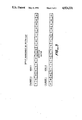
- FIG. 3 illustrates the arrangement of particular cylinders heads and sectors on a disc drive as shown in FIG. 1.
- the typical disc drive as shown in FIG. 1 includes a plurality of discs 12 stacked on a spindle 25 for rotation by a spindle motor.
- a transducer 10 is positioned over any of the tracks 0-685 for reading or writing data on the selected track.
- the positioning occurs under control of a stepper motor 30 in response to commands from a microprocessor 40.
- Rotation of the stepper motor 30 and its spindle 36 causes a band 38 which is connected to the head 19 of arm 32 to wind and unwind on the spindle 36, moving the arm 20 and associated transducer 10 to the selected track.
- the drive has two additional cylinders identified as -1 and -2 cylinders, with four tracks each, formatted 256 bytes per sector, 32 sectors per track and with a 1 to 1 interleave factor.
- the objective of this invention is to minimize the time spent in mechanically seeking for the correct track. Such improper seeking can occur if the original seek is carried out to a block or track which is in fact defective.
- Such disc media defects fall into two categories.
- One category comprises defects identified by the manufacturer during the course of testing, using stress enlarging techniques. These defects are supplied in a list in cylinder, head, and bytes from index formats.
- An example of the numbering scheme appears in FIG. 3.
- the cylinder 0 is a reference to the fact than in a disc drive having multiple data storage surfaces on discs, track 0 on each disc is defined as lying on a single cylinder 0.
- a separate head or transducer 10 reads and writes the data on each disc surface. Therefore, a particular location in any disc surface may be particularly identified by defining the cylinder and the head number (these two together combining to identify a particular track on a particular disc surface) followed by identifying a particular sector.
- defects which must be taken into account are those identified by the user over a period of time. These defects are supplied in a list in logical block address format.
- the defect information and operating systems and the like may be stored on a disc drive for ready access in the disc drive on tracts -1 and -2 identified above.
- the manufacturer's defect list is converted into a physical cylinder, head, sector format to make up the known defect list.
- the defective sectors are flagged so that they are functionally bypassed.
- a method is provided for the user to add defects to the known defect list using logical block address format. (It is well known in the disc drive field to convert logical block addresses into cylinder head and sector addresses as most seek commands are initially input as logical block addresses.)
- the added defects are converted to physical cylinder head sector format, taking into account previous defects and the interleave factor in the discs.
- the logical block address is translated into cylinder head and sector addresses and adjusted for defects to avoid performance hits during seek.
- the first step is the conversion of the manufacturer's defect list into a physical cylinder, head, sector format.
- the last number in the known defect list is a relative defect in the list with the first entry being 1, the second entry 2, the third entry 3, and so on. All of this technique is well known in this technology.
- the objective is to provide a list of defects defined in terms of cylinder head and sector on the disc of a particular disc drive.
- the defective sectors are flagged so that they are functionally bypassed.
- the disc is incrementally formatted a track at a time, starting at cylinder 0, track 0, to cylinder 614, track 3.
- the first sector on cylinder 0 track 0 is formatted as logical block 0.
- the logical block address is incremented across the entire disc and not reset to 0 on track or cylinder boundaries.
- a table with an entry for each physical sector on the track is generated. Referencing the known defect list, any defective sectors are marked defective. The remaining sectors are numbered taking into account the interleave factor.
- the defective sector does not get a logical block address and does not cause a logical block address to be skipped. It merely means one less logical block for each defect encountered.
- this step is basically an extension of known formatting and sector addressing techniques, with the only modification being in the numbering scheme to take into account the defects which have been identified so that they are not given addresses and are not addressed during any data access command.
- the user can add defects to the known defect list using logical block address format, simply by using the standard manual format commands which are well known in the disc drive industry.
- the added defects are converted to cylinder head and sector format taking into account previous defects and the interleave factor. Thus, these are simply eliminated as possible addresses for data storage so that they are not reaccessed.
- the added defects are merged with the known defect list into a scratch pad area, in the microprocessor 40, then copied back into the known defect list so that a single merged list is generated.
- a read command which comprises a logical block address as shown in FIG. 2 is received, it is converted into a cylinder head and sector address and adjusted for defects to avoid performance hits during seek time.
- the known defect list is loaded into a RAM 41 which is part of MBU 40. (In this way, when new defects are added by a format command by the user, the new known defect list is written back to the -2 cylinder so that the latest updated defect list is always available to upload a power on time during operation is always available in the RAM 41.)
- Read/write and seek commands are presented in logical block format to the microprocessor 40.
- the logical block address is converted to target cylinder head and sector address at step 50. This alone would be enough information to correctly position the actuator head and select the correct head if there were no defects.
- the average seek time for such an operation is 65 milliseconds, with track time being 20 milliseconds.
- the computed cylinder head and sector can be accurately corrected for defects as shown in the following steps in approximately 70 microseconds, thus avoiding a 60 ms to 20 ms seek to wrong track and a subsequent 20 ms to 65 ms reseek to the correct track is a considerable time saver.
- a seek to correct cylinder and head is immediately achieved.
- step 52 a seek to the correct cylinder and head position is immediately carried out and a read operation conducted at 56. If more blocks are to be transferred as shown at the decision block 58, the next block is converted to cylinder head sector format at step 60; the necessary cylinder or head switch is carried out at step 62; and a branch is carried out to select the correct head. Then the program returns to step 54 to seek the cause the actuator to seek the correct track address. If no cylinder or head switch is required at step 62, the next block is immediately read at step 64 followed by a return to the command to wait for the end of the sector at 66 and then branching to the finish of the program.
Abstract
Description
Claims (22)
Priority Applications (1)
| Application Number | Priority Date | Filing Date | Title |
|---|---|---|---|
| US07/197,247 US4924331A (en) | 1985-11-20 | 1988-05-23 | Method for mapping around defective sectors in a disc drive |
Applications Claiming Priority (2)
| Application Number | Priority Date | Filing Date | Title |
|---|---|---|---|
| US06/800,062 US4746998A (en) | 1985-11-20 | 1985-11-20 | Method for mapping around defective sectors in a disc drive |
| US07/197,247 US4924331A (en) | 1985-11-20 | 1988-05-23 | Method for mapping around defective sectors in a disc drive |
Related Parent Applications (1)
| Application Number | Title | Priority Date | Filing Date |
|---|---|---|---|
| US06/800,062 Continuation US4746998A (en) | 1985-11-20 | 1985-11-20 | Method for mapping around defective sectors in a disc drive |
Publications (1)
| Publication Number | Publication Date |
|---|---|
| US4924331A true US4924331A (en) | 1990-05-08 |
Family
ID=26892700
Family Applications (1)
| Application Number | Title | Priority Date | Filing Date |
|---|---|---|---|
| US07/197,247 Expired - Lifetime US4924331A (en) | 1985-11-20 | 1988-05-23 | Method for mapping around defective sectors in a disc drive |
Country Status (1)
| Country | Link |
|---|---|
| US (1) | US4924331A (en) |
Cited By (75)
| Publication number | Priority date | Publication date | Assignee | Title |
|---|---|---|---|---|
| US5200959A (en) * | 1989-10-17 | 1993-04-06 | Sundisk Corporation | Device and method for defect handling in semi-conductor memory |
| US5233591A (en) * | 1989-04-21 | 1993-08-03 | Kabushiki Kaisha Toshiba | Auto changer apparatus with a defect control memory |
| US5357381A (en) * | 1991-01-18 | 1994-10-18 | Matsushita Electric Industrial Co., Ltd. | Flexible magnetic disc drive apparatus for designating alternate sectors for defective sectors |
| US5367652A (en) * | 1990-02-02 | 1994-11-22 | Golden Jeffrey A | Disc drive translation and defect management apparatus and method |
| US5369758A (en) * | 1991-11-15 | 1994-11-29 | Fujitsu Limited | Checking for proper locations of storage devices in a storage array |
| US5455721A (en) * | 1994-03-03 | 1995-10-03 | Cirrus Logic, Inc. | Method and apparatus for automatic sector pulse generation and split field calculation in disk drives |
| US5465382A (en) * | 1992-04-17 | 1995-11-07 | International Business Machines Corporation | System and method for mapping directly accessible magnetic DASD storage to fixed block optical storage |
| DE19541861A1 (en) * | 1994-11-10 | 1996-05-15 | Sharp Kk | Recording and playing apparatus for disks |
| US5535328A (en) * | 1989-04-13 | 1996-07-09 | Sandisk Corporation | Non-volatile memory system card with flash erasable sectors of EEprom cells including a mechanism for substituting defective cells |
| US5602987A (en) * | 1989-04-13 | 1997-02-11 | Sandisk Corporation | Flash EEprom system |
| US5613082A (en) * | 1993-06-14 | 1997-03-18 | International Business Machines Corporation | Control of record media using device only accessible control areas and directory of media control marks and error history |
| US5696775A (en) * | 1994-09-23 | 1997-12-09 | Cirrus Logic, Inc. | Method and apparatus for detecting the transfer of a wrong sector |
| US5768043A (en) * | 1994-03-03 | 1998-06-16 | Cirrus Logic, Inc. | Table driven method and apparatus for automatic split field processing |
| US5784216A (en) * | 1995-11-16 | 1998-07-21 | Seagate Technology, Inc. | Method and apparatus for recording defective track identification information in a disk drive |
| US5796546A (en) * | 1995-11-13 | 1998-08-18 | Fujitsu Limited | Disk apparatus for controlling a seek operation of a read/write head to a target location of a recording disk |
| US5838614A (en) * | 1995-07-31 | 1998-11-17 | Lexar Microsystems, Inc. | Identification and verification of a sector within a block of mass storage flash memory |
| US5848438A (en) * | 1994-03-03 | 1998-12-08 | Cirrus Logic, Inc. | Memory mapping defect management technique for automatic track processing without ID field |
| US5907856A (en) * | 1995-07-31 | 1999-05-25 | Lexar Media, Inc. | Moving sectors within a block of information in a flash memory mass storage architecture |
| US5928370A (en) * | 1997-02-05 | 1999-07-27 | Lexar Media, Inc. | Method and apparatus for verifying erasure of memory blocks within a non-volatile memory structure |
| US5930815A (en) * | 1995-07-31 | 1999-07-27 | Lexar Media, Inc. | Moving sequential sectors within a block of information in a flash memory mass storage architecture |
| US5974544A (en) * | 1991-12-17 | 1999-10-26 | Dell Usa, L.P. | Method and controller for defect tracking in a redundant array |
| EP0953893A2 (en) * | 1998-04-30 | 1999-11-03 | Samsung Electronics Co., Ltd. | Transparent record access manager for a disk drive |
| US6025966A (en) * | 1994-03-03 | 2000-02-15 | Cirrus Logic, Inc. | Defect management for automatic track processing without ID field |
| US6034897A (en) * | 1999-04-01 | 2000-03-07 | Lexar Media, Inc. | Space management for managing high capacity nonvolatile memory |
| US6076137A (en) * | 1997-12-11 | 2000-06-13 | Lexar Media, Inc. | Method and apparatus for storing location identification information within non-volatile memory devices |
| US6081878A (en) * | 1997-03-31 | 2000-06-27 | Lexar Media, Inc. | Increasing the memory performance of flash memory devices by writing sectors simultaneously to multiple flash memory devices |
| US6115785A (en) * | 1995-07-31 | 2000-09-05 | Lexar Media, Inc. | Direct logical block addressing flash memory mass storage architecture |
| US6122195A (en) * | 1997-03-31 | 2000-09-19 | Lexar Media, Inc. | Method and apparatus for decreasing block write operation times performed on nonvolatile memory |
| US6125435A (en) * | 1995-09-13 | 2000-09-26 | Lexar Media, Inc. | Alignment of cluster address to block addresses within a semiconductor non-volatile mass storage memory |
| US6134065A (en) * | 1996-09-06 | 2000-10-17 | U.S. Philips Corporation | Method and device utilizing erasure information as a reliability indicator in an information medium |
| US6141249A (en) * | 1999-04-01 | 2000-10-31 | Lexar Media, Inc. | Organization of blocks within a nonvolatile memory unit to effectively decrease sector write operation time |
| US6154331A (en) * | 1996-10-01 | 2000-11-28 | Lsi Logic Corporation | Disk formatter write gate look-ahead device |
| US6262918B1 (en) | 1999-04-01 | 2001-07-17 | Lexar Media, Inc. | Space management for managing high capacity nonvolatile memory |
| US6292913B1 (en) | 1997-12-29 | 2001-09-18 | Samsung Electronics Co., Ltd. | Method of detecting defects in a magnetic disk memory device |
| US20020032828A1 (en) * | 2000-05-10 | 2002-03-14 | Seagate Technology, Llc | Seamless defect management conversion |
| US6374337B1 (en) | 1998-11-17 | 2002-04-16 | Lexar Media, Inc. | Data pipelining method and apparatus for memory control circuit |
| US6411546B1 (en) | 1997-03-31 | 2002-06-25 | Lexar Media, Inc. | Nonvolatile memory using flexible erasing methods and method and system for using same |
| US20030070036A1 (en) * | 2001-09-28 | 2003-04-10 | Gorobets Sergey Anatolievich | Memory system for data storage and retrieval |
| US20030079149A1 (en) * | 2001-09-28 | 2003-04-24 | Edwin Payne Robert | Power management system |
| US6567307B1 (en) | 2000-07-21 | 2003-05-20 | Lexar Media, Inc. | Block management for mass storage |
| US20030165076A1 (en) * | 2001-09-28 | 2003-09-04 | Gorobets Sergey Anatolievich | Method of writing data to non-volatile memory |
| US6728851B1 (en) | 1995-07-31 | 2004-04-27 | Lexar Media, Inc. | Increasing the memory performance of flash memory devices by writing sectors simultaneously to multiple flash memory devices |
| GB2396453A (en) * | 2002-11-15 | 2004-06-23 | Plasmon Lms Inc | Relocation batch processing using a memory and defect management area in disk drives with grown defects |
| US6757800B1 (en) | 1995-07-31 | 2004-06-29 | Lexar Media, Inc. | Increasing the memory performance of flash memory devices by writing sectors simultaneously to multiple flash memory devices |
| US20040136283A1 (en) * | 1999-03-30 | 2004-07-15 | Hiroshi Koide | Optical disk |
| US6801979B1 (en) | 1995-07-31 | 2004-10-05 | Lexar Media, Inc. | Method and apparatus for memory control circuit |
| US6813678B1 (en) | 1998-01-22 | 2004-11-02 | Lexar Media, Inc. | Flash memory system |
| US20050018527A1 (en) * | 2001-09-28 | 2005-01-27 | Gorobets Sergey Anatolievich | Non-volatile memory control |
| US20050055497A1 (en) * | 1995-07-31 | 2005-03-10 | Petro Estakhri | Faster write operations to nonvolatile memory by manipulation of frequently-accessed sectors |
| US6898662B2 (en) | 2001-09-28 | 2005-05-24 | Lexar Media, Inc. | Memory system sectors |
| US20050138464A1 (en) * | 2003-11-21 | 2005-06-23 | Chong Pohsoon | Scratch fill using scratch tracking table |
| US20050185067A1 (en) * | 2004-02-23 | 2005-08-25 | Petro Estakhri | Secure compact flash |
| US6950918B1 (en) | 2002-01-18 | 2005-09-27 | Lexar Media, Inc. | File management of one-time-programmable nonvolatile memory devices |
| US6957295B1 (en) | 2002-01-18 | 2005-10-18 | Lexar Media, Inc. | File management of one-time-programmable nonvolatile memory devices |
| US6978342B1 (en) | 1995-07-31 | 2005-12-20 | Lexar Media, Inc. | Moving sectors within a block of information in a flash memory mass storage architecture |
| US7000064B2 (en) | 2001-09-28 | 2006-02-14 | Lexar Media, Inc. | Data handling system |
| US7102671B1 (en) | 2000-02-08 | 2006-09-05 | Lexar Media, Inc. | Enhanced compact flash memory card |
| US20060200262A1 (en) * | 2005-03-04 | 2006-09-07 | Dyer Richard C | Method and system for reducing production cycle time of a hard disk drive and a generic hard disk drive ready for customization |
| US7167944B1 (en) | 2000-07-21 | 2007-01-23 | Lexar Media, Inc. | Block management for mass storage |
| US7185208B2 (en) | 2001-09-28 | 2007-02-27 | Lexar Media, Inc. | Data processing |
| US20070053093A1 (en) * | 2005-09-07 | 2007-03-08 | Walter Allen | Track Defect Map for a Disk Drive Data Storage System |
| US7190617B1 (en) | 1989-04-13 | 2007-03-13 | Sandisk Corporation | Flash EEprom system |
| US7231643B1 (en) | 2002-02-22 | 2007-06-12 | Lexar Media, Inc. | Image rescue system including direct communication between an application program and a device driver |
| US20070183074A1 (en) * | 2005-11-23 | 2007-08-09 | Fujifilm Microdisks Usa Inc. | Disk drive defect map encoding scheme |
| US7275686B2 (en) | 2003-12-17 | 2007-10-02 | Lexar Media, Inc. | Electronic equipment point-of-sale activation to avoid theft |
| US20070242379A1 (en) * | 2006-04-18 | 2007-10-18 | Seagate Technology Llc | Defect reallocation for data tracks having large sector size |
| US20070300128A1 (en) * | 2005-06-03 | 2007-12-27 | Shang-Hao Chen | A method and apparatus of defect areas management |
| US7370166B1 (en) | 2004-04-30 | 2008-05-06 | Lexar Media, Inc. | Secure portable storage device |
| WO2008087082A1 (en) * | 2007-01-15 | 2008-07-24 | Thomson Licensing | Method and apparatus for recording data into a matrix of memory devices |
| US7447069B1 (en) | 1989-04-13 | 2008-11-04 | Sandisk Corporation | Flash EEprom system |
| US7464306B1 (en) | 2004-08-27 | 2008-12-09 | Lexar Media, Inc. | Status of overall health of nonvolatile memory |
| US7594063B1 (en) | 2004-08-27 | 2009-09-22 | Lexar Media, Inc. | Storage capacity status |
| US7725628B1 (en) | 2004-04-20 | 2010-05-25 | Lexar Media, Inc. | Direct secondary device interface by a host |
| US20100134919A1 (en) * | 2008-12-01 | 2010-06-03 | Seagate Technology Llc | Microactuator control that avoids thermal asperities on disk surfaces |
| US20100251027A1 (en) * | 2009-03-30 | 2010-09-30 | Verizon Patent And Licensing Inc. | Methods and systems of determining a quality level of a software instance |
Citations (1)
| Publication number | Priority date | Publication date | Assignee | Title |
|---|---|---|---|---|
| US4214280A (en) * | 1978-05-30 | 1980-07-22 | Xerox Corporation | Method and apparatus for recording data without recording on defective areas of a data recording medium |
-
1988
- 1988-05-23 US US07/197,247 patent/US4924331A/en not_active Expired - Lifetime
Patent Citations (1)
| Publication number | Priority date | Publication date | Assignee | Title |
|---|---|---|---|---|
| US4214280A (en) * | 1978-05-30 | 1980-07-22 | Xerox Corporation | Method and apparatus for recording data without recording on defective areas of a data recording medium |
Cited By (171)
| Publication number | Priority date | Publication date | Assignee | Title |
|---|---|---|---|---|
| US6684345B2 (en) | 1989-04-13 | 2004-01-27 | Sandisk Corporation | Flash EEprom system |
| US20030110411A1 (en) * | 1989-04-13 | 2003-06-12 | Eliyahou Harari | Flash EEprom system |
| US6149316A (en) | 1989-04-13 | 2000-11-21 | Sandisk Corporation | Flash EEprom system |
| US6373747B1 (en) | 1989-04-13 | 2002-04-16 | Sandisk Corporation | Flash EEprom system |
| US6523132B1 (en) | 1989-04-13 | 2003-02-18 | Sandisk Corporation | Flash EEprom system |
| US7190617B1 (en) | 1989-04-13 | 2007-03-13 | Sandisk Corporation | Flash EEprom system |
| US5936971A (en) * | 1989-04-13 | 1999-08-10 | Sandisk Corporation | Multi-state flash EEprom system with cache memory |
| US6763480B2 (en) | 1989-04-13 | 2004-07-13 | Sandisk Corporation | Flash EEprom system |
| US5535328A (en) * | 1989-04-13 | 1996-07-09 | Sandisk Corporation | Non-volatile memory system card with flash erasable sectors of EEprom cells including a mechanism for substituting defective cells |
| US5862080A (en) * | 1989-04-13 | 1999-01-19 | Sandisk Corporation | Multi-state flash EEprom system with defect handling |
| US5602987A (en) * | 1989-04-13 | 1997-02-11 | Sandisk Corporation | Flash EEprom system |
| US7447069B1 (en) | 1989-04-13 | 2008-11-04 | Sandisk Corporation | Flash EEprom system |
| US5671229A (en) * | 1989-04-13 | 1997-09-23 | Sandisk Corporation | Flash eeprom system with defect handling |
| US6757842B2 (en) | 1989-04-13 | 2004-06-29 | Sandisk Corporation | Flash EEprom system |
| US5877986A (en) * | 1989-04-13 | 1999-03-02 | Sandisk Corporation | Multi-state Flash EEprom system on a card that includes defective cell substitution |
| US5233591A (en) * | 1989-04-21 | 1993-08-03 | Kabushiki Kaisha Toshiba | Auto changer apparatus with a defect control memory |
| US5200959A (en) * | 1989-10-17 | 1993-04-06 | Sundisk Corporation | Device and method for defect handling in semi-conductor memory |
| US5367652A (en) * | 1990-02-02 | 1994-11-22 | Golden Jeffrey A | Disc drive translation and defect management apparatus and method |
| US5357381A (en) * | 1991-01-18 | 1994-10-18 | Matsushita Electric Industrial Co., Ltd. | Flexible magnetic disc drive apparatus for designating alternate sectors for defective sectors |
| US5598528A (en) * | 1991-11-15 | 1997-01-28 | Fujitsu Limited | Checking for proper locations of storage device in a storage device array |
| US5369758A (en) * | 1991-11-15 | 1994-11-29 | Fujitsu Limited | Checking for proper locations of storage devices in a storage array |
| US5751936A (en) * | 1991-11-15 | 1998-05-12 | Fujitsu Limited | Checking for proper locations of storage devices in a storage device array |
| US5974544A (en) * | 1991-12-17 | 1999-10-26 | Dell Usa, L.P. | Method and controller for defect tracking in a redundant array |
| US5465382A (en) * | 1992-04-17 | 1995-11-07 | International Business Machines Corporation | System and method for mapping directly accessible magnetic DASD storage to fixed block optical storage |
| US5613082A (en) * | 1993-06-14 | 1997-03-18 | International Business Machines Corporation | Control of record media using device only accessible control areas and directory of media control marks and error history |
| US6025966A (en) * | 1994-03-03 | 2000-02-15 | Cirrus Logic, Inc. | Defect management for automatic track processing without ID field |
| US6560055B1 (en) | 1994-03-03 | 2003-05-06 | Cirrus Logic, Inc. | ID-less format defect management for automatic track processing including translation of physical sector number into logical sector number |
| US5455721A (en) * | 1994-03-03 | 1995-10-03 | Cirrus Logic, Inc. | Method and apparatus for automatic sector pulse generation and split field calculation in disk drives |
| US5768043A (en) * | 1994-03-03 | 1998-06-16 | Cirrus Logic, Inc. | Table driven method and apparatus for automatic split field processing |
| US5848438A (en) * | 1994-03-03 | 1998-12-08 | Cirrus Logic, Inc. | Memory mapping defect management technique for automatic track processing without ID field |
| US5696775A (en) * | 1994-09-23 | 1997-12-09 | Cirrus Logic, Inc. | Method and apparatus for detecting the transfer of a wrong sector |
| DE19541861B4 (en) * | 1994-11-10 | 2005-08-04 | Sharp K.K. | Error processing apparatus for recording and reproducing apparatus and method for processing errors in a disk drive |
| DE19541861A1 (en) * | 1994-11-10 | 1996-05-15 | Sharp Kk | Recording and playing apparatus for disks |
| US5732050A (en) * | 1994-11-10 | 1998-03-24 | Sharp Kabushiki Kaisha | Recording and reproducing apparatus |
| US20090043952A1 (en) * | 1995-07-31 | 2009-02-12 | Lexar Media, Inc. | Moving sectors within a block of information in a flash memory mass storage architecture |
| US7523249B1 (en) | 1995-07-31 | 2009-04-21 | Lexar Media, Inc. | Direct logical block addressing flash memory mass storage architecture |
| US6128695A (en) * | 1995-07-31 | 2000-10-03 | Lexar Media, Inc. | Identification and verification of a sector within a block of mass storage flash memory |
| US9026721B2 (en) | 1995-07-31 | 2015-05-05 | Micron Technology, Inc. | Managing defective areas of memory |
| US20050055497A1 (en) * | 1995-07-31 | 2005-03-10 | Petro Estakhri | Faster write operations to nonvolatile memory by manipulation of frequently-accessed sectors |
| US7908426B2 (en) | 1995-07-31 | 2011-03-15 | Lexar Media, Inc. | Moving sectors within a block of information in a flash memory mass storage architecture |
| US6145051A (en) * | 1995-07-31 | 2000-11-07 | Lexar Media, Inc. | Moving sectors within a block of information in a flash memory mass storage architecture |
| US6115785A (en) * | 1995-07-31 | 2000-09-05 | Lexar Media, Inc. | Direct logical block addressing flash memory mass storage architecture |
| US6912618B2 (en) | 1995-07-31 | 2005-06-28 | Lexar Media, Inc. | Direct logical block addressing flash memory mass storage architecture |
| US6172906B1 (en) | 1995-07-31 | 2001-01-09 | Lexar Media, Inc. | Increasing the memory performance of flash memory devices by writing sectors simultaneously to multiple flash memory devices |
| US6202138B1 (en) | 1995-07-31 | 2001-03-13 | Lexar Media, Inc | Increasing the memory performance of flash memory devices by writing sectors simultaneously to multiple flash memory devices |
| US6223308B1 (en) | 1995-07-31 | 2001-04-24 | Lexar Media, Inc. | Identification and verification of a sector within a block of mass STO rage flash memory |
| US7441090B2 (en) | 1995-07-31 | 2008-10-21 | Lexar Media, Inc. | System and method for updating data sectors in a non-volatile memory using logical block addressing |
| US7424593B2 (en) | 1995-07-31 | 2008-09-09 | Micron Technology, Inc. | Increasing the memory performance of flash memory devices by writing sectors simultaneously to multiple flash memory devices |
| US8032694B2 (en) | 1995-07-31 | 2011-10-04 | Micron Technology, Inc. | Direct logical block addressing flash memory mass storage architecture |
| US8078797B2 (en) | 1995-07-31 | 2011-12-13 | Micron Technology, Inc. | Increasing the memory performance of flash memory devices by writing sectors simultaneously to multiple flash memory devices |
| US7774576B2 (en) | 1995-07-31 | 2010-08-10 | Lexar Media, Inc. | Direct logical block addressing flash memory mass storage architecture |
| US8171203B2 (en) | 1995-07-31 | 2012-05-01 | Micron Technology, Inc. | Faster write operations to nonvolatile memory using FSInfo sector manipulation |
| US6393513B2 (en) | 1995-07-31 | 2002-05-21 | Lexar Media, Inc. | Identification and verification of a sector within a block of mass storage flash memory |
| US6397314B1 (en) | 1995-07-31 | 2002-05-28 | Lexar Media, Inc. | Increasing the memory performance of flash memory devices by writing sectors simultaneously to multiple flash memory devices |
| US7263591B2 (en) | 1995-07-31 | 2007-08-28 | Lexar Media, Inc. | Increasing the memory performance of flash memory devices by writing sectors simultaneously to multiple flash memory devices |
| US20040199714A1 (en) * | 1995-07-31 | 2004-10-07 | Petro Estakhri | Increasing the memory performance of flash memory devices by writing sectors simultaneously to multiple flash memory devices |
| US7549013B2 (en) | 1995-07-31 | 2009-06-16 | Lexar Media, Inc. | Increasing the memory performance of flash memory devices by writing sectors simultaneously to multiple flash memory devices |
| US8397019B2 (en) | 1995-07-31 | 2013-03-12 | Micron Technology, Inc. | Memory for accessing multiple sectors of information substantially concurrently |
| US7111140B2 (en) | 1995-07-31 | 2006-09-19 | Lexar Media, Inc. | Increasing the memory performance of flash memory devices by writing sectors simultaneously to multiple flash memory devices |
| US20090204750A1 (en) * | 1995-07-31 | 2009-08-13 | Petro Estakhri | Direct logical block addressing flash memory mass storage architecture |
| US8554985B2 (en) | 1995-07-31 | 2013-10-08 | Micron Technology, Inc. | Memory block identified by group of logical block addresses, storage device with movable sectors, and methods |
| US5930815A (en) * | 1995-07-31 | 1999-07-27 | Lexar Media, Inc. | Moving sequential sectors within a block of information in a flash memory mass storage architecture |
| US20060195651A1 (en) * | 1995-07-31 | 2006-08-31 | Petro Estakhri | Increasing the memory performance of flash memory devices by writing sectors simultaneously to multiple flash memory devices |
| US20060155923A1 (en) * | 1995-07-31 | 2006-07-13 | Petro Estakhri | Increasing the memory performance of flash memory devices by writing sectors simultaneously to multiple flash memory devices |
| US20060020747A1 (en) * | 1995-07-31 | 2006-01-26 | Petro Estakhri | Moving sectors within a block of information in a flash memory mass storage architecture |
| US6801979B1 (en) | 1995-07-31 | 2004-10-05 | Lexar Media, Inc. | Method and apparatus for memory control circuit |
| US6728851B1 (en) | 1995-07-31 | 2004-04-27 | Lexar Media, Inc. | Increasing the memory performance of flash memory devices by writing sectors simultaneously to multiple flash memory devices |
| US6978342B1 (en) | 1995-07-31 | 2005-12-20 | Lexar Media, Inc. | Moving sectors within a block of information in a flash memory mass storage architecture |
| US6757800B1 (en) | 1995-07-31 | 2004-06-29 | Lexar Media, Inc. | Increasing the memory performance of flash memory devices by writing sectors simultaneously to multiple flash memory devices |
| US5907856A (en) * | 1995-07-31 | 1999-05-25 | Lexar Media, Inc. | Moving sectors within a block of information in a flash memory mass storage architecture |
| US5838614A (en) * | 1995-07-31 | 1998-11-17 | Lexar Microsystems, Inc. | Identification and verification of a sector within a block of mass storage flash memory |
| US8793430B2 (en) | 1995-07-31 | 2014-07-29 | Micron Technology, Inc. | Electronic system having memory with a physical block having a sector storing data and indicating a move status of another sector of the physical block |
| US6125435A (en) * | 1995-09-13 | 2000-09-26 | Lexar Media, Inc. | Alignment of cluster address to block addresses within a semiconductor non-volatile mass storage memory |
| US5796546A (en) * | 1995-11-13 | 1998-08-18 | Fujitsu Limited | Disk apparatus for controlling a seek operation of a read/write head to a target location of a recording disk |
| US5784216A (en) * | 1995-11-16 | 1998-07-21 | Seagate Technology, Inc. | Method and apparatus for recording defective track identification information in a disk drive |
| US6134065A (en) * | 1996-09-06 | 2000-10-17 | U.S. Philips Corporation | Method and device utilizing erasure information as a reliability indicator in an information medium |
| US6154331A (en) * | 1996-10-01 | 2000-11-28 | Lsi Logic Corporation | Disk formatter write gate look-ahead device |
| US5928370A (en) * | 1997-02-05 | 1999-07-27 | Lexar Media, Inc. | Method and apparatus for verifying erasure of memory blocks within a non-volatile memory structure |
| US6587382B1 (en) | 1997-03-31 | 2003-07-01 | Lexar Media, Inc. | Nonvolatile memory using flexible erasing methods and method and system for using same |
| US6081878A (en) * | 1997-03-31 | 2000-06-27 | Lexar Media, Inc. | Increasing the memory performance of flash memory devices by writing sectors simultaneously to multiple flash memory devices |
| US6411546B1 (en) | 1997-03-31 | 2002-06-25 | Lexar Media, Inc. | Nonvolatile memory using flexible erasing methods and method and system for using same |
| US6122195A (en) * | 1997-03-31 | 2000-09-19 | Lexar Media, Inc. | Method and apparatus for decreasing block write operation times performed on nonvolatile memory |
| US6076137A (en) * | 1997-12-11 | 2000-06-13 | Lexar Media, Inc. | Method and apparatus for storing location identification information within non-volatile memory devices |
| US6327639B1 (en) | 1997-12-11 | 2001-12-04 | Lexar Media, Inc. | Method and apparatus for storing location identification information within non-volatile memory devices |
| US6292913B1 (en) | 1997-12-29 | 2001-09-18 | Samsung Electronics Co., Ltd. | Method of detecting defects in a magnetic disk memory device |
| US6813678B1 (en) | 1998-01-22 | 2004-11-02 | Lexar Media, Inc. | Flash memory system |
| CN1103954C (en) * | 1998-04-30 | 2003-03-26 | 三星电子株式会社 | Transparent record access supervisor of disk drive |
| EP0953893A3 (en) * | 1998-04-30 | 2007-08-29 | Samsung Electronics Co., Ltd. | Transparent record access manager for a disk drive |
| EP0953893A2 (en) * | 1998-04-30 | 1999-11-03 | Samsung Electronics Co., Ltd. | Transparent record access manager for a disk drive |
| US6374337B1 (en) | 1998-11-17 | 2002-04-16 | Lexar Media, Inc. | Data pipelining method and apparatus for memory control circuit |
| US20040136283A1 (en) * | 1999-03-30 | 2004-07-15 | Hiroshi Koide | Optical disk |
| US7068586B2 (en) * | 1999-03-30 | 2006-06-27 | Ricoh Company, Ltd. | Optical disk |
| US6262918B1 (en) | 1999-04-01 | 2001-07-17 | Lexar Media, Inc. | Space management for managing high capacity nonvolatile memory |
| US6034897A (en) * | 1999-04-01 | 2000-03-07 | Lexar Media, Inc. | Space management for managing high capacity nonvolatile memory |
| US6134151A (en) * | 1999-04-01 | 2000-10-17 | Lexar Media, Inc. | Space management for managing high capacity nonvolatile memory |
| US6141249A (en) * | 1999-04-01 | 2000-10-31 | Lexar Media, Inc. | Organization of blocks within a nonvolatile memory unit to effectively decrease sector write operation time |
| US7102671B1 (en) | 2000-02-08 | 2006-09-05 | Lexar Media, Inc. | Enhanced compact flash memory card |
| US20020032828A1 (en) * | 2000-05-10 | 2002-03-14 | Seagate Technology, Llc | Seamless defect management conversion |
| US7167944B1 (en) | 2000-07-21 | 2007-01-23 | Lexar Media, Inc. | Block management for mass storage |
| US7734862B2 (en) | 2000-07-21 | 2010-06-08 | Lexar Media, Inc. | Block management for mass storage |
| US6567307B1 (en) | 2000-07-21 | 2003-05-20 | Lexar Media, Inc. | Block management for mass storage |
| US8250294B2 (en) | 2000-07-21 | 2012-08-21 | Micron Technology, Inc. | Block management for mass storage |
| US8019932B2 (en) | 2000-07-21 | 2011-09-13 | Micron Technology, Inc. | Block management for mass storage |
| US7254724B2 (en) | 2001-09-28 | 2007-08-07 | Lexar Media, Inc. | Power management system |
| US20030165076A1 (en) * | 2001-09-28 | 2003-09-04 | Gorobets Sergey Anatolievich | Method of writing data to non-volatile memory |
| US20030126481A1 (en) * | 2001-09-28 | 2003-07-03 | Payne Robert Edwin | Power management system |
| US8135925B2 (en) | 2001-09-28 | 2012-03-13 | Micron Technology, Inc. | Methods of operating a memory system |
| US20070274150A1 (en) * | 2001-09-28 | 2007-11-29 | Lexar Media, Inc. | Non-volatile memory control |
| US8208322B2 (en) | 2001-09-28 | 2012-06-26 | Micron Technology, Inc. | Non-volatile memory control |
| US7340581B2 (en) | 2001-09-28 | 2008-03-04 | Lexar Media, Inc. | Method of writing data to non-volatile memory |
| US7000064B2 (en) | 2001-09-28 | 2006-02-14 | Lexar Media, Inc. | Data handling system |
| US20080155184A1 (en) * | 2001-09-28 | 2008-06-26 | Lexar Media, Inc. | Methods and apparatus for writing data to non-volatile memory |
| US20030079149A1 (en) * | 2001-09-28 | 2003-04-24 | Edwin Payne Robert | Power management system |
| US20080215903A1 (en) * | 2001-09-28 | 2008-09-04 | Lexar Media, Inc. | Power management of non-volatile memory systems |
| US7681057B2 (en) | 2001-09-28 | 2010-03-16 | Lexar Media, Inc. | Power management of non-volatile memory systems |
| US6898662B2 (en) | 2001-09-28 | 2005-05-24 | Lexar Media, Inc. | Memory system sectors |
| US7944762B2 (en) | 2001-09-28 | 2011-05-17 | Micron Technology, Inc. | Non-volatile memory control |
| US7215580B2 (en) | 2001-09-28 | 2007-05-08 | Lexar Media, Inc. | Non-volatile memory control |
| US7917709B2 (en) | 2001-09-28 | 2011-03-29 | Lexar Media, Inc. | Memory system for data storage and retrieval |
| US8386695B2 (en) | 2001-09-28 | 2013-02-26 | Micron Technology, Inc. | Methods and apparatus for writing data to non-volatile memory |
| US9489301B2 (en) | 2001-09-28 | 2016-11-08 | Micron Technology, Inc. | Memory systems |
| US8694722B2 (en) | 2001-09-28 | 2014-04-08 | Micron Technology, Inc. | Memory systems |
| US9032134B2 (en) | 2001-09-28 | 2015-05-12 | Micron Technology, Inc. | Methods of operating a memory system that include outputting a data pattern from a sector allocation table to a host if a logical sector is indicated as being erased |
| US20030070036A1 (en) * | 2001-09-28 | 2003-04-10 | Gorobets Sergey Anatolievich | Memory system for data storage and retrieval |
| US20050018527A1 (en) * | 2001-09-28 | 2005-01-27 | Gorobets Sergey Anatolievich | Non-volatile memory control |
| US7185208B2 (en) | 2001-09-28 | 2007-02-27 | Lexar Media, Inc. | Data processing |
| US20100095055A1 (en) * | 2001-09-28 | 2010-04-15 | Lexar Media, Inc. | Memory system for data storage and retrieval |
| US6950918B1 (en) | 2002-01-18 | 2005-09-27 | Lexar Media, Inc. | File management of one-time-programmable nonvolatile memory devices |
| US6957295B1 (en) | 2002-01-18 | 2005-10-18 | Lexar Media, Inc. | File management of one-time-programmable nonvolatile memory devices |
| US7231643B1 (en) | 2002-02-22 | 2007-06-12 | Lexar Media, Inc. | Image rescue system including direct communication between an application program and a device driver |
| US8166488B2 (en) | 2002-02-22 | 2012-04-24 | Micron Technology, Inc. | Methods of directly accessing a mass storage data device |
| US9213606B2 (en) | 2002-02-22 | 2015-12-15 | Micron Technology, Inc. | Image rescue |
| GB2396453A (en) * | 2002-11-15 | 2004-06-23 | Plasmon Lms Inc | Relocation batch processing using a memory and defect management area in disk drives with grown defects |
| US20040153743A1 (en) * | 2002-11-15 | 2004-08-05 | Bolt David A. | Relocation batch processing for disk drives |
| US7200771B2 (en) | 2002-11-15 | 2007-04-03 | Plasmon Lms, Inc. | Relocation batch processing for disk drives |
| US20050138464A1 (en) * | 2003-11-21 | 2005-06-23 | Chong Pohsoon | Scratch fill using scratch tracking table |
| US7275686B2 (en) | 2003-12-17 | 2007-10-02 | Lexar Media, Inc. | Electronic equipment point-of-sale activation to avoid theft |
| US20050185067A1 (en) * | 2004-02-23 | 2005-08-25 | Petro Estakhri | Secure compact flash |
| US8316165B2 (en) | 2004-04-20 | 2012-11-20 | Micron Technology, Inc. | Direct secondary device interface by a host |
| US8090886B2 (en) | 2004-04-20 | 2012-01-03 | Micron Technology, Inc. | Direct secondary device interface by a host |
| US7725628B1 (en) | 2004-04-20 | 2010-05-25 | Lexar Media, Inc. | Direct secondary device interface by a host |
| US7865659B2 (en) | 2004-04-30 | 2011-01-04 | Micron Technology, Inc. | Removable storage device |
| US20110082979A1 (en) * | 2004-04-30 | 2011-04-07 | Lexar Media, Inc. | Removable storage device |
| US8612671B2 (en) | 2004-04-30 | 2013-12-17 | Micron Technology, Inc. | Removable devices |
| US9576154B2 (en) | 2004-04-30 | 2017-02-21 | Micron Technology, Inc. | Methods of operating storage systems including using a key to determine whether a password can be changed |
| US10049207B2 (en) | 2004-04-30 | 2018-08-14 | Micron Technology, Inc. | Methods of operating storage systems including encrypting a key salt |
| US7370166B1 (en) | 2004-04-30 | 2008-05-06 | Lexar Media, Inc. | Secure portable storage device |
| US8151041B2 (en) | 2004-04-30 | 2012-04-03 | Micron Technology, Inc. | Removable storage device |
| US7594063B1 (en) | 2004-08-27 | 2009-09-22 | Lexar Media, Inc. | Storage capacity status |
| US8296545B2 (en) | 2004-08-27 | 2012-10-23 | Micron Technology, Inc. | Storage capacity status |
| US20100231408A1 (en) * | 2004-08-27 | 2010-09-16 | Lexar Media, Inc. | Display configured to display health status of a memory device |
| US7464306B1 (en) | 2004-08-27 | 2008-12-09 | Lexar Media, Inc. | Status of overall health of nonvolatile memory |
| US20090077434A1 (en) * | 2004-08-27 | 2009-03-19 | Lexar Media, Inc. | Status of overall health of nonvolatile memory |
| US7743290B2 (en) | 2004-08-27 | 2010-06-22 | Lexar Media, Inc. | Status of overall health of nonvolatile memory |
| US20090327595A1 (en) * | 2004-08-27 | 2009-12-31 | Lexar Media, Inc. | Storage capacity status |
| US7949822B2 (en) | 2004-08-27 | 2011-05-24 | Micron Technology, Inc. | Storage capacity status |
| US20110219175A1 (en) * | 2004-08-27 | 2011-09-08 | Lexar Media, Inc. | Storage capacity status |
| US20060200262A1 (en) * | 2005-03-04 | 2006-09-07 | Dyer Richard C | Method and system for reducing production cycle time of a hard disk drive and a generic hard disk drive ready for customization |
| US7447557B2 (en) * | 2005-03-04 | 2008-11-04 | Hitachi Global Storage Technologies Netherlands, B.V. | Method and system for reducing production cycle time of a hard disk drive by featuring an inventoried generic hard disk drive with customized microcode |
| US7512846B2 (en) * | 2005-06-03 | 2009-03-31 | Quanta Storage Inc. | Method and apparatus of defect areas management |
| US20070300128A1 (en) * | 2005-06-03 | 2007-12-27 | Shang-Hao Chen | A method and apparatus of defect areas management |
| US20070053093A1 (en) * | 2005-09-07 | 2007-03-08 | Walter Allen | Track Defect Map for a Disk Drive Data Storage System |
| US8854758B2 (en) * | 2005-09-07 | 2014-10-07 | Agere Systems Inc. | Track defect map for a disk drive data storage system |
| US20070183074A1 (en) * | 2005-11-23 | 2007-08-09 | Fujifilm Microdisks Usa Inc. | Disk drive defect map encoding scheme |
| US20070242379A1 (en) * | 2006-04-18 | 2007-10-18 | Seagate Technology Llc | Defect reallocation for data tracks having large sector size |
| US7817364B2 (en) * | 2006-04-18 | 2010-10-19 | Seagate Technology Llc | Defect reallocation for data tracks having large sector size |
| WO2008087082A1 (en) * | 2007-01-15 | 2008-07-24 | Thomson Licensing | Method and apparatus for recording data into a matrix of memory devices |
| US7804661B2 (en) | 2008-12-01 | 2010-09-28 | Seagate Technology Llc | Microactuator control that avoids thermal asperities on disk surfaces |
| US20100134919A1 (en) * | 2008-12-01 | 2010-06-03 | Seagate Technology Llc | Microactuator control that avoids thermal asperities on disk surfaces |
| US9021441B2 (en) * | 2009-03-30 | 2015-04-28 | Verizon Patent And Licensing Inc. | Methods and systems of determining a quality level of a software instance |
| US20100251027A1 (en) * | 2009-03-30 | 2010-09-30 | Verizon Patent And Licensing Inc. | Methods and systems of determining a quality level of a software instance |
Similar Documents
| Publication | Publication Date | Title |
|---|---|---|
| US4924331A (en) | Method for mapping around defective sectors in a disc drive | |
| US4746998A (en) | Method for mapping around defective sectors in a disc drive | |
| JPS62219264A (en) | Mapping detouring defective sector with disc drive | |
| EP0444886B1 (en) | Disk drive accessing system and method of accessing a disk drive | |
| US5835930A (en) | One or more logical tracks per physical track in a headerless disk drive | |
| US6735678B2 (en) | Method and apparatus for disc drive defragmentation | |
| US5313612A (en) | Information recording and reproducing apparatus including both data and work optical disk drives for restoring data and commands after a malfunction | |
| US7330322B2 (en) | Utilizing a combination of physical tracks and virtual tracks to store data on a data storage medium | |
| JPH01128266A (en) | Method for controlling drive device for writable disk | |
| JP2003501778A (en) | Disk drive controller circuit and method for skipping defective and / or unwanted sectors | |
| JPH02263362A (en) | Method for accessing data on recording medium and data recorder using this method | |
| JP3749312B2 (en) | Method for manipulating data sector of data storage disk and disk storage system | |
| KR960003024B1 (en) | Data file and directory for data file information writing method and apparatus | |
| US6693754B2 (en) | Method and apparatus for a disc drive adaptive file system | |
| KR100274742B1 (en) | Initiating method for copying hard-disk drive and copying apparatus thereof | |
| WO1991000594A1 (en) | Method for compensating for the unique mechanical and electrical characteristics of a disc drive | |
| JP2728949B2 (en) | Control method of optical disk subsystem | |
| KR100462215B1 (en) | A method for improving the efficiency of future failure analysis in the hard disk drive manufacturing process | |
| KR100496180B1 (en) | Defect Handling on Hard Disk Drives | |
| KR100419394B1 (en) | Method for recording error management program for analyzing and repairing malfunction of magnetic disk recording device | |
| JPH02103758A (en) | Magneto-optical disk device | |
| JPH0417458B2 (en) | ||
| JPS6363990B2 (en) | ||
| JPS60247728A (en) | Disk control system | |
| JPH05101545A (en) | Magnetic disk controller |
Legal Events
| Date | Code | Title | Description |
|---|---|---|---|
| STCF | Information on status: patent grant |
Free format text: PATENTED CASE |
|
| FEPP | Fee payment procedure |
Free format text: PAYOR NUMBER ASSIGNED (ORIGINAL EVENT CODE: ASPN); ENTITY STATUS OF PATENT OWNER: LARGE ENTITY |
|
| AS | Assignment |
Owner name: SEAGATE TECHNOLOGY, INC., CALIFORNIA Free format text: RELEASED BY SECURED PARTY;ASSIGNOR:BANKAMERICA CORPORATION;REEL/FRAME:006496/0048 Effective date: 19920421 |
|
| FPAY | Fee payment |
Year of fee payment: 4 |
|
| FPAY | Fee payment |
Year of fee payment: 8 |
|
| FEPP | Fee payment procedure |
Free format text: PAYOR NUMBER ASSIGNED (ORIGINAL EVENT CODE: ASPN); ENTITY STATUS OF PATENT OWNER: LARGE ENTITY Free format text: PAYER NUMBER DE-ASSIGNED (ORIGINAL EVENT CODE: RMPN); ENTITY STATUS OF PATENT OWNER: LARGE ENTITY |
|
| AS | Assignment |
Owner name: SEAGATE TECHNOLOGY LLC, CALIFORNIA Free format text: ASSIGNMENT OF ASSIGNORS INTEREST;ASSIGNOR:SEAGATE TECHNOLOGY, INC.;REEL/FRAME:011077/0319 Effective date: 20000728 |
|
| FEPP | Fee payment procedure |
Free format text: PAYOR NUMBER ASSIGNED (ORIGINAL EVENT CODE: ASPN); ENTITY STATUS OF PATENT OWNER: LARGE ENTITY Free format text: PAYER NUMBER DE-ASSIGNED (ORIGINAL EVENT CODE: RMPN); ENTITY STATUS OF PATENT OWNER: LARGE ENTITY |
|
| AS | Assignment |
Owner name: THE CHASE MANHATTAN BANK, AS COLLATERAL AGENT, NEW Free format text: SECURITY AGREEMENT;ASSIGNOR:SEAGATE TECHNOLOGY LLC;REEL/FRAME:011461/0001 Effective date: 20001122 |
|
| FPAY | Fee payment |
Year of fee payment: 12 |
|
| AS | Assignment |
Owner name: JPMORGAN CHASE BANK, AS COLLATERAL AGENT, NEW YORK Free format text: SECURITY AGREEMENT;ASSIGNOR:SEAGATE TECHNOLOGY LLC;REEL/FRAME:013177/0001 Effective date: 20020513 Owner name: JPMORGAN CHASE BANK, AS COLLATERAL AGENT,NEW YORK Free format text: SECURITY AGREEMENT;ASSIGNOR:SEAGATE TECHNOLOGY LLC;REEL/FRAME:013177/0001 Effective date: 20020513 |
|
| AS | Assignment |
Owner name: SEAGATE TECHNOLOGY LLC, CALIFORNIA Free format text: RELEASE OF SECURITY INTERESTS IN PATENT RIGHTS;ASSIGNOR:JPMORGAN CHASE BANK, N.A. (FORMERLY KNOWN AS THE CHASE MANHATTAN BANK AND JPMORGAN CHASE BANK), AS ADMINISTRATIVE AGENT;REEL/FRAME:016926/0821 Effective date: 20051130 |
|
| AS | Assignment |
Owner name: JPMORGAN CHASE BANK, N.A., AS ADMINISTRATIVE AGENT Free format text: SECURITY AGREEMENT;ASSIGNORS:MAXTOR CORPORATION;SEAGATE TECHNOLOGY LLC;SEAGATE TECHNOLOGY INTERNATIONAL;REEL/FRAME:022757/0017 Effective date: 20090507 Owner name: WELLS FARGO BANK, NATIONAL ASSOCIATION, AS COLLATE Free format text: SECURITY AGREEMENT;ASSIGNORS:MAXTOR CORPORATION;SEAGATE TECHNOLOGY LLC;SEAGATE TECHNOLOGY INTERNATIONAL;REEL/FRAME:022757/0017 Effective date: 20090507 |
|
| AS | Assignment |
Owner name: SEAGATE TECHNOLOGY LLC, CALIFORNIA Free format text: RELEASE;ASSIGNOR:JPMORGAN CHASE BANK, N.A., AS ADMINISTRATIVE AGENT;REEL/FRAME:025662/0001 Effective date: 20110114 Owner name: SEAGATE TECHNOLOGY HDD HOLDINGS, CALIFORNIA Free format text: RELEASE;ASSIGNOR:JPMORGAN CHASE BANK, N.A., AS ADMINISTRATIVE AGENT;REEL/FRAME:025662/0001 Effective date: 20110114 Owner name: SEAGATE TECHNOLOGY INTERNATIONAL, CALIFORNIA Free format text: RELEASE;ASSIGNOR:JPMORGAN CHASE BANK, N.A., AS ADMINISTRATIVE AGENT;REEL/FRAME:025662/0001 Effective date: 20110114 Owner name: MAXTOR CORPORATION, CALIFORNIA Free format text: RELEASE;ASSIGNOR:JPMORGAN CHASE BANK, N.A., AS ADMINISTRATIVE AGENT;REEL/FRAME:025662/0001 Effective date: 20110114 |
|
| AS | Assignment |
Owner name: SEAGATE TECHNOLOGY LLC, CALIFORNIA Free format text: TERMINATION AND RELEASE OF SECURITY INTEREST IN PATENT RIGHTS;ASSIGNOR:WELLS FARGO BANK, NATIONAL ASSOCIATION, AS COLLATERAL AGENT AND SECOND PRIORITY REPRESENTATIVE;REEL/FRAME:030833/0001 Effective date: 20130312 Owner name: SEAGATE TECHNOLOGY INTERNATIONAL, CAYMAN ISLANDS Free format text: TERMINATION AND RELEASE OF SECURITY INTEREST IN PATENT RIGHTS;ASSIGNOR:WELLS FARGO BANK, NATIONAL ASSOCIATION, AS COLLATERAL AGENT AND SECOND PRIORITY REPRESENTATIVE;REEL/FRAME:030833/0001 Effective date: 20130312 Owner name: EVAULT INC. (F/K/A I365 INC.), CALIFORNIA Free format text: TERMINATION AND RELEASE OF SECURITY INTEREST IN PATENT RIGHTS;ASSIGNOR:WELLS FARGO BANK, NATIONAL ASSOCIATION, AS COLLATERAL AGENT AND SECOND PRIORITY REPRESENTATIVE;REEL/FRAME:030833/0001 Effective date: 20130312 Owner name: SEAGATE TECHNOLOGY US HOLDINGS, INC., CALIFORNIA Free format text: TERMINATION AND RELEASE OF SECURITY INTEREST IN PATENT RIGHTS;ASSIGNOR:WELLS FARGO BANK, NATIONAL ASSOCIATION, AS COLLATERAL AGENT AND SECOND PRIORITY REPRESENTATIVE;REEL/FRAME:030833/0001 Effective date: 20130312 |